
Varanasi One-Night Two-Days Tour Plan with Booking Support , For travelers with limited time wanting to experience Varanasi’s spiritual essence without extended stays, a carefully crafted one-night two-days tour plan offers the perfect solution. This condensed yet comprehensive itinerary captures the holy city’s quintessential experiences—sunrise boat rides, ancient temple darshan, sacred evening aarti, and cultural immersion—within a compact 36-hour timeframe. When combined with professional booking support handling accommodation, transportation, and activity reservations, this efficient tour format transforms brief visits into deeply meaningful spiritual journeys that honor both your time constraints and Varanasi’s profound significance.
Understanding the One-Night Format
Varanasi One-Night Two-Days Tour Plan with Booking Support , The one-night two-days structure optimizes limited time by strategically scheduling experiences around Varanasi’s natural rhythms. Day one typically begins with afternoon arrival (noon-3 PM), allowing evening exploration culminating in the spectacular Ganga Aarti ceremony. The overnight stay positions you for day two’s crowning experience—the magical sunrise boat ride—followed by morning temple visits and departure by early afternoon, freeing you for onward travel or return journeys.
Varanasi One-Night Two-Days Tour Plan with Booking Support , This compressed format works particularly well for business travelers adding spiritual experiences to work trips, tourists on broader India circuits wanting to include Varanasi without extensive detours, pilgrims fulfilling religious obligations within tight schedules, or weekend travelers from nearby cities maximizing two-day breaks. While more relaxed multi-day stays allow deeper immersion, the one-night format proves remarkably effective at delivering Varanasi’s essence when planned thoughtfully.
The key lies in strategic prioritization—focusing on must-experience elements while accepting that comprehensive exploration requires longer stays. Quality trumps quantity; experiencing five sites deeply proves more meaningful than rushing through fifteen superficially. Professional booking support becomes especially crucial in this format, as efficient logistics maximize productive hours while minimizing time wasted on arrangements, transportation, or navigation.
Comprehensive Day-by-Day Itinerary
Day One: Afternoon Arrival to Evening Aarti (12:00 PM – 9:00 PM)
Your tour begins with afternoon arrival via train, flight, or road. Pre-arranged pickup by private vehicle eliminates arrival hassles, whisking you directly to your hotel for check-in and brief freshening up (1:00-2:00 PM). Rather than unpacking completely, prepare for immediate exploration—wear comfortable, modest clothing suitable for temple visits and keep a small day bag with essentials.
Departing around 2:30 PM, your first destination is the magnificent Kashi Vishwanath Temple, Varanasi’s spiritual heart. Afternoon timing avoids morning crowds while allowing adequate darshan time at this most sacred Shiva temple. Your guide navigates security protocols and congested approaches, explaining the temple’s profound significance as one of twelve Jyotirlingas. The experience grounds you immediately in Varanasi’s spiritual intensity (approximately 1.5 hours including approach, darshan, and return to vehicle).
Next, visit Sankat Mochan Hanuman Temple (4:00-5:00 PM), beloved throughout India for obstacle-removal blessings. The relatively spacious premises provide welcome respite from old city congestion, and your guide shares stories about temple founder Tulsidas and Hanuman’s devotional significance. The peaceful atmosphere offers contemplative moments balancing Kashi Vishwanath’s intensity.
Return briefly to your hotel (5:30-6:00 PM) for rest, tea, and preparation for the evening’s highlight. Use this break wisely—hydrate, change into fresh clothes if desired, and mentally prepare for the evening’s powerful spiritual experiences.
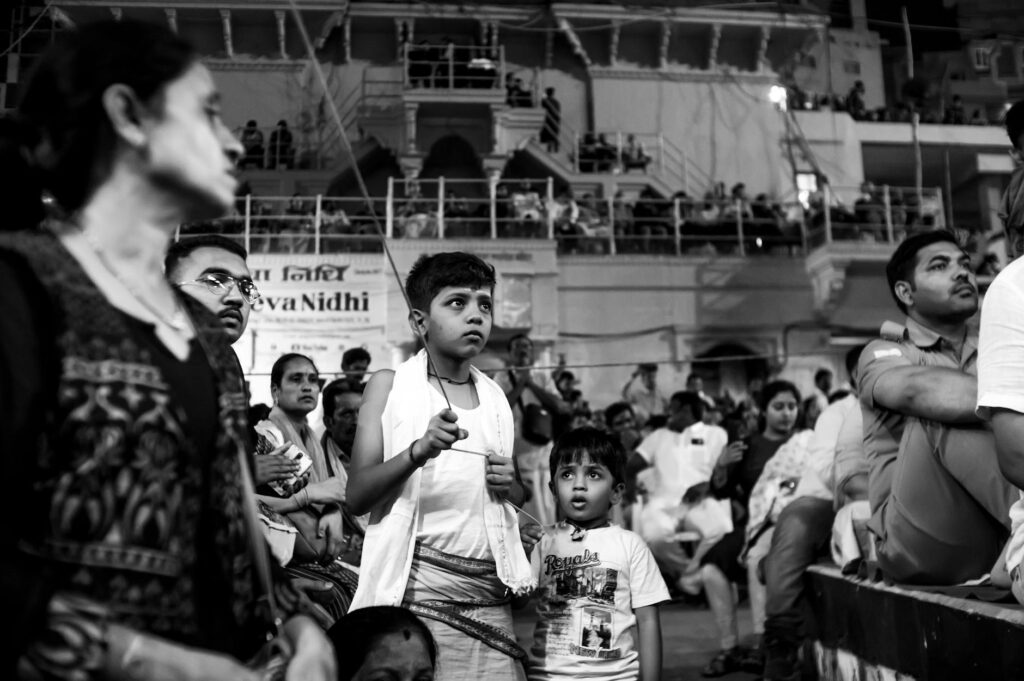
Depart around 6:15 PM for Dashashwamedh Ghat to secure good viewing positions before the 6:45-7:00 PM Ganga Aarti ceremony begins. Your booking support arranges optimal viewing—perhaps reserved seating on elevated platforms avoiding crowd crush, or boat positioning offering water-level perspectives as the ceremony’s lights reflect across the Ganges. The hour-long ritual’s synchronized priest movements, massive brass lamps, devotional chants, and palpable spiritual energy create unforgettable impressions transcending religious boundaries.
Post-aarti, enjoy dinner at a recommended riverside restaurant (8:30-9:30 PM) before returning to your hotel for rest, ensuring adequate sleep before the early morning boat ride (10:00 PM).
Day Two: Sunrise Experience to Afternoon Departure (5:00 AM – 2:00 PM)
The day begins early with 5:00 AM pickup for the sunrise boat ride. Pre-dawn Varanasi reveals its most authentic spiritual character as the city awakens to devotional routines. Board your pre-arranged boat at Dashashwamedh or Assi Ghat around 5:30 AM.
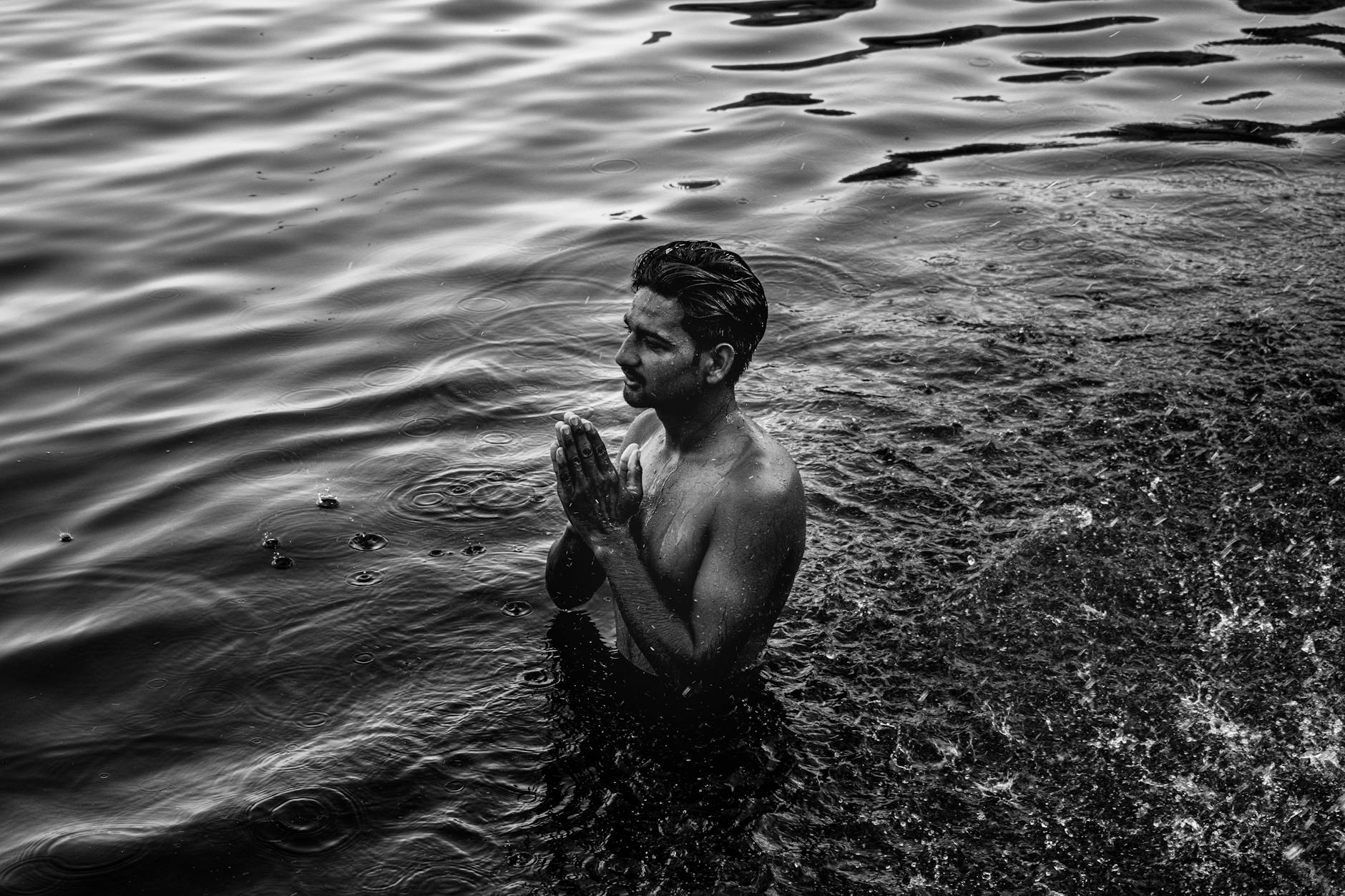
The sunrise boat ride (5:30-6:45 AM) glides along the ghats as darkness gradually yields to dawn. Watch the sky transform through purple, pink, and gold hues while devotees perform morning ablutions, priests conduct sunrise ceremonies, and yoga practitioners salute the emerging sun. The boat passes approximately 20-25 ghats including the cremation ghats where life’s cycle completes continuously. Your boatman provides commentary about major landmarks while respecting the contemplative silence sunrise naturally inspires.
Return to shore around 6:45 AM, proceeding to a recommended café for breakfast with Ganges views (7:00-8:00 AM). Local favorites like Brown Bread Bakery at Assi Ghat or various rooftop restaurants offer perfect spots for processing the morning’s profound experiences over coffee and food.
Post-breakfast, visit Sarnath (9:00 AM-12:00 PM), located 10 kilometers from Varanasi where Buddha delivered his first sermon after enlightenment. The archaeological complex features the impressive Dhamek Stupa, meditation gardens, and the excellent Sarnath Museum housing the famous Ashoka Lion Capital. The peaceful contrast to Varanasi’s intensity provides balanced perspectives on spiritual seeking across traditions.
Return to Varanasi for hotel checkout and brief lunch (12:30-1:30 PM), followed by departure transfers to railway station, airport, or onward destinations, concluding your intensive yet comprehensive Varanasi experience (2:00 PM).
Essential Booking Support Services
Professional booking support transforms this ambitious itinerary from theoretical plan into smooth execution. Services include pre-booking accommodation matching your budget and preferences, arranging airport/railway station transfers coordinated with your exact arrival times, securing private vehicle with experienced driver for all local transportation, pre-booking boat rides guaranteeing availability and preferred timing, arranging Ganga Aarti viewing positions (reserved seating or boat positions), booking knowledgeable local guides providing cultural context and handling logistics, making restaurant reservations at recommended establishments, and providing 24/7 support contacts for real-time assistance.
Additional valuable services include customization based on your specific interests—perhaps emphasizing photography opportunities, arranging special temple pujas, including silk shopping visits, or adjusting pacing for elderly travelers. Booking coordinators also provide practical pre-trip briefings covering weather-appropriate clothing, what to carry in day bags, temple protocols, photography restrictions, and safety tips.
The convenience factor cannot be overstated—booking support eliminates hours of research, price comparisons, reservation calls, and coordination headaches. You receive comprehensive confirmations with all details, contact numbers, meeting points, and backup plans. If issues arise—delayed trains, last-minute changes, unexpected closures—booking coordinators handle problem-solving while you focus on experiences rather than logistics.
Accommodation Recommendations
For one-night stays, choose accommodation balancing comfort, location, and value. Budget Options (₹1,500-2,500) include clean guesthouses or basic hotels near Assi Ghat or slightly removed from main tourist areas, offering essential amenities and authentic neighborhood experiences. Mid-Range Options (₹3,000-6,000) feature 3-star hotels or boutique properties with better amenities, convenient locations, and professional service—optimal for most travelers wanting comfort without luxury premiums. Premium Options (₹7,000-15,000+) include heritage properties, river-facing hotels, or 5-star establishments with exceptional comfort, though arguably unnecessary for single-night stays where you’re barely in the room.
Location considerations matter significantly in compact itineraries. Properties near Assi Ghat offer easy morning boat ride access and pleasant neighborhood atmosphere. Hotels near Dashashwamedh Ghat position you centrally for evening aarti but involve more congestion and noise. Slightly removed properties in quieter areas provide better sleep quality, important when facing early mornings, though requiring slightly longer transfers.
Confirm early check-in possibilities (arriving afternoon, you’ll appreciate rooms ready immediately) and late check-out flexibility (returning from Sarnath around 12:30 PM, extra hour avoiding rushed packing helps tremendously).
Transportation and Vehicle Requirements
Private vehicles prove essential for maximizing the one-night format’s efficiency. Sedan cars suffice for 2-4 passengers, while larger groups benefit from SUVs or MPVs. Confirm vehicle availability for the full two-day duration including early morning pickups—some budget operators won’t provide 5:00 AM service without surcharges.
Calculate approximate distances: hotel to Kashi Vishwanath (variable depending on hotel location, 2-10 km), Sankat Mochan Temple (southern Varanasi, approximately 5-8 km from center), evening ghat visits (1-5 km), morning boat ride locations (similar), and Sarnath round-trip (20 km total). Total driving rarely exceeds 60-80 kilometers across both days, well within standard package limits, though confirm kilometer inclusions preventing surprise overage charges.
Pricing Structure for Complete Packages
One-night two-days packages with comprehensive booking support typically range ₹4,000-12,000 per person based on accommodation choices and inclusions. Budget Packages (₹4,000-6,000) include basic hotel, private sedan for local transport, one boat ride, airport/station transfers, and driver services. Mid-Range Packages (₹6,500-9,000) add better accommodation, two boat rides (sunrise and sunset/aarti), professional guide services, and some meals. Premium Packages (₹10,000-15,000) feature upscale hotels, enhanced vehicles, comprehensive guide services, VIP Ganga Aarti arrangements, all meals, and white-glove booking coordination.
Costs decrease substantially for couples or groups sharing vehicles and sometimes rooms—per-person prices quoted above assume double occupancy. Solo travelers pay premiums for single rooms and solo vehicle use.
Booking Timeline and Process
Book one-night packages 1-2 weeks minimum before travel, though earlier booking (3-4 weeks) during peak season (November-February) or festivals secures better availability and rates. The booking process involves initial inquiry specifying travel dates, number of travelers, budget range, and any special requirements; receiving detailed proposals from operators outlining itineraries, accommodation options, inclusions/exclusions, and pricing; selecting preferred package and requesting modifications if needed; providing passenger details, arrival/departure information, and dietary restrictions; making advance payment (typically 25-30%) to confirm bookings; receiving comprehensive confirmation documents with all vouchers, contact numbers, and instructions; and final pre-arrival confirmation 24-48 hours before travel.
Maximizing Your Brief Stay
Success in one-night tours requires strategic mindset shifts. Prioritize experiences over comprehensive coverage—deeply experiencing five meaningful sites surpasses superficially visiting fifteen. Embrace early wake-ups without complaint; sunrise boat rides justify temporary sleep sacrifices. Minimize shopping and optional activities; focus on spiritual and cultural core experiences. Trust your booking coordinator’s recommendations about timing, sequencing, and site selection—their experience optimizes limited hours. Maintain flexible attitudes about minor schedule adjustments weather or crowds might necessitate. Pack light for quick hotel transitions. Pre-download offline maps and save all contact numbers. Carry portable chargers ensuring phone availability for navigation and photography.
Most importantly, stay present rather than anxiously tracking time. Yes, hours are limited, but Varanasi’s power transcends duration—single profound moments observing sunrise over the Ganges or experiencing Ganga Aarti’s collective devotion can impact you as deeply as week-long stays. Quality of attention matters more than quantity of time.
Realistic Expectations and Trade-offs
Understand what one-night formats sacrifice compared to longer stays. You won’t experience Varanasi’s rhythms across multiple days, see lesser-known temples and neighborhoods, develop relationships with local people, have extensive free time for wandering and discovery, or fully adjust to the city’s intensity before departing. The compressed timeline creates some rush feelings contradicting ideally contemplative spiritual exploration.
However, for travelers genuinely constrained by time, one-night tours deliver remarkable value—witnessing sunrise and sunset Ganges experiences, visiting primary temples, attending Ganga Aarti, exploring Sarnath’s Buddhist heritage, sampling local food, and absorbing Varanasi’s unique atmosphere. Many visitors report single nights sparking such profound impressions they return later for extended stays, viewing brief visits as appetizers whetting deeper exploratory hunger.
Conclusion
Varanasi one-night two-days tour plans with professional booking support offer efficient, meaningful introductions to India’s holiest city for time-constrained travelers. Through strategic itinerary design emphasizing quintessential experiences, comprehensive booking services eliminating logistical friction, and realistic prioritization acknowledging brevity’s limitations, these compact tours deliver surprising depth within tight timeframes. While no substitute for leisurely multi-day immersion, well-executed one-night plans prove that profound spiritual encounters resist measurement in hours or days—sometimes single sunrise moments floating peacefully on sacred waters teach truths week-long studies cannot convey, proving travel’s deepest transformations emerge from presence quality rather than duration quantity.
Frequently Asked Questions
Q1: Is one night really enough to experience Varanasi meaningfully, or will we miss too much?
One night provides sufficient time to experience Varanasi’s essential spiritual elements—sunrise boat ride, major temple darshan, and Ganga Aarti—which constitute the city’s core attractions. You’ll witness the Ganges at its most magical moments (dawn and dusk), visit the most significant temples including Kashi Vishwanath, explore Buddhist heritage at Sarnath, and absorb the city’s intense spiritual atmosphere. However, you’ll sacrifice depth for breadth—no time for exploring hidden neighborhood temples, wandering old city lanes spontaneously, developing rhythms with the city’s daily cycles, or revisiting particularly resonant locations. Many travelers find one night sparks such powerful impressions they return for extended visits later. Consider your constraints realistically: if you genuinely cannot allocate more time, a well-planned one-night tour delivers remarkable value and authentic experiences. If you can extend even one additional night (making it 2 nights/3 days), the reduced pressure and added flexibility significantly enhance the experience. One night works best as introduction rather than comprehensive exploration, and for fulfilling specific spiritual intentions—darshan at Kashi Vishwanath, experiencing the Ganges, attending aarti—rather than exhaustive cultural immersion.
Q2: What happens if our flight/train is delayed and we arrive late on Day 1?
Delays are common in Indian travel, and reputable booking coordinators accommodate them through itinerary flexibility. For delays of 1-2 hours, the day one itinerary typically remains intact with compressed timing—perhaps visiting one temple instead of two, or proceeding directly to evening aarti preparations. For longer delays (3-4 hours), afternoon temple visits might be eliminated, focusing exclusively on evening aarti and dinner, ensuring you don’t miss the day’s highlight. For severe delays arriving evening or night, coordinators rearrange the schedule—perhaps swapping day one and day two activities partially, adding an early evening boat ride the second day, or extending checkout by few hours if your departure timing allows. The one-night format’s biggest vulnerability is arrival delays eliminating an entire half-day of limited time available. When booking, build buffer if possible—arriving morning instead of afternoon creates resilience against delays, though this requires additional accommodation night. Communicate with booking coordinators immediately when significant delays occur; their real-time problem-solving minimizes impact. Many coordinators maintain backup plans for common delay scenarios, swiftly pivoting to alternatives ensuring you experience core elements despite timing changes.
Q3: Can we skip Sarnath on Day 2 to have more relaxed morning or additional Varanasi time?
Absolutely—itinerary customization represents a key booking support advantage. Sarnath, while historically and spiritually significant, appeals primarily to those interested in Buddhist heritage, archaeological sites, or comprehensive cultural exploration. If your interests focus exclusively on Hindu temples and Ganges experiences, communicate this during booking and coordinators adjust accordingly. Without Sarnath, day two might include extended sunrise boat ride, visits to additional Varanasi temples (New Vishwanath at BHU, Durga Temple, Kal Bhairav), walking tour through old city lanes, silk weaving workshop visits, shopping time for Banarasi silk and religious items, or simply more contemplative time at ghats watching daily life unfold. The relaxed pacing proves valuable for elderly travelers, those exhausted from day one’s intensity, or anyone preferring depth over breadth. Conversely, some travelers request replacing Sarnath with different destinations—perhaps Ramnagar Fort and Museum, Chunar Fort, or extended time at specific temples matching their devotional practices. Discuss preferences during booking; good coordinators welcome such input and design itineraries matching your actual interests rather than enforcing standard formulas.
Q4: What booking support services are most valuable, and which can we skip to reduce costs?
Most valuable services include accommodation booking (ensuring quality matches promises and availability during peak periods), private vehicle arrangement (eliminating transportation stress and maximizing time efficiency), and arrival/departure transfers (smooth station/airport transitions). These core services provide substantial value justifying costs. Professional guides add significant value through cultural context, language assistance, navigation of complex temple protocols, and logistical problem-solving—particularly valuable for first-time India visitors or those unfamiliar with Hindu traditions. Boat ride pre-booking guarantees availability at preferred timing and prevents ghat-side price negotiations when you’re tired. Less essential services potentially skipped for cost savings include reserved Ganga Aarti seating (you can arrive early for free general viewing), restaurant reservations (spontaneous dining works fine in Varanasi), and meal inclusions (allows flexibility trying different establishments). However, evaluate time costs versus money savings—independently arranging components might save ₹1,000-2,000 but consume many hours of research, phone calls, coordination, and stress. For one-night tours where time is precious, comprehensive booking support’s convenience usually justifies premium costs unless budget constraints are severe.
Q5: How does booking support handle special requirements like dietary restrictions or accessibility needs?
Professional booking coordinators excel at accommodating special requirements when informed during initial booking. For dietary restrictions—vegan, gluten-free, Jain, allergies, or religious requirements—coordinators identify suitable restaurants, communicate requirements to hotel kitchens, and brief guides about appropriate dining venues. Varanasi’s predominantly vegetarian food culture actually simplifies many dietary accommodations. For accessibility needs—mobility limitations, wheelchair requirements, elderly assistance—coordinators select hotels with elevators or ground-floor rooms, arrange vehicles with easy entry access and space for mobility devices, choose temples with ramp access or minimal stairs, provide extra assistants for boarding boats safely, and adjust pacing with frequent rest breaks. Medical concerns like diabetes requiring meal timing, cardiac conditions limiting physical exertion, or medications requiring refrigeration are addressed through itinerary modifications, emergency protocol briefings, and coordination with hotels about special storage. The key is detailed, honest communication during booking rather than hoping to manage issues spontaneously. Coordinators cannot guarantee every Varanasi location is fully accessible—many ancient temples have inherent stair challenges—but they identify the most manageable options and arrange appropriate support. Special requirements usually incur modest additional costs (₹500-2,000) for extra services, vehicle modifications, or specialized assistance, representing worthwhile investments ensuring safe, comfortable experiences.





Comments are closed.